// industry
Why Interior Designers Need a Client Portal in 2026

The problem with scattered communication
Every interior designer knows the drill: a client sends feedback via WhatsApp at 11pm, approves a material over email the next morning, then calls to change their mind during lunch. By the end of the week, you have decisions scattered across four different platforms with no single source of truth.
This isn't just annoying – it's expensive. Studies show that professionals spend up to 28% of their workweek managing emails alone. For interior designers juggling multiple projects, that number can be even higher.
What a client portal actually solves
A client portal isn't just a fancy shared folder. It's a structured environment where every interaction is captured, organized, and actionable:
**Decisions are recorded, not lost.** When your client approves a sofa in the portal, it's timestamped and linked to the budget. No more "I thought we agreed on the gray one."
**Feedback is contextual.** Instead of receiving a text that says "I don't like the kitchen," your client comments directly on the specific element in a visual presentation.
**Progress is visible.** Clients can see exactly where their project stands without sending you a "quick update?" message.
The trust factor
Here's what most designers don't realize: a client portal doesn't just save you time – it builds trust. When clients can log in and see their project, review their decisions, and track progress, they feel in control. And clients who feel in control don't micromanage.
What to look for in a design client portal
Not all portals are created equal. For interior design specifically, you need:
1. **No account creation for clients.** Your clients are busy homeowners, not tech-savvy early adopters. A simple link with a PIN code is ideal.
2. **Visual-first interface.** Interior design is visual. Your portal should present moodboards, material selections, and concept presentations – not spreadsheets.
3. **Budget integration.** Every design decision has a cost implication. The best portals connect approvals directly to budgets.
4. **Multi-room support.** Real projects have multiple spaces. Your portal should handle complexity without becoming complex.
The bottom line
A client portal isn't a luxury – it's infrastructure. Just like architects use BIM and developers use project management tools, interior designers need a dedicated system that respects the visual, iterative nature of their work.
The question isn't whether you need one. It's how much longer you can afford to work without one.
How Liru puts this into practice
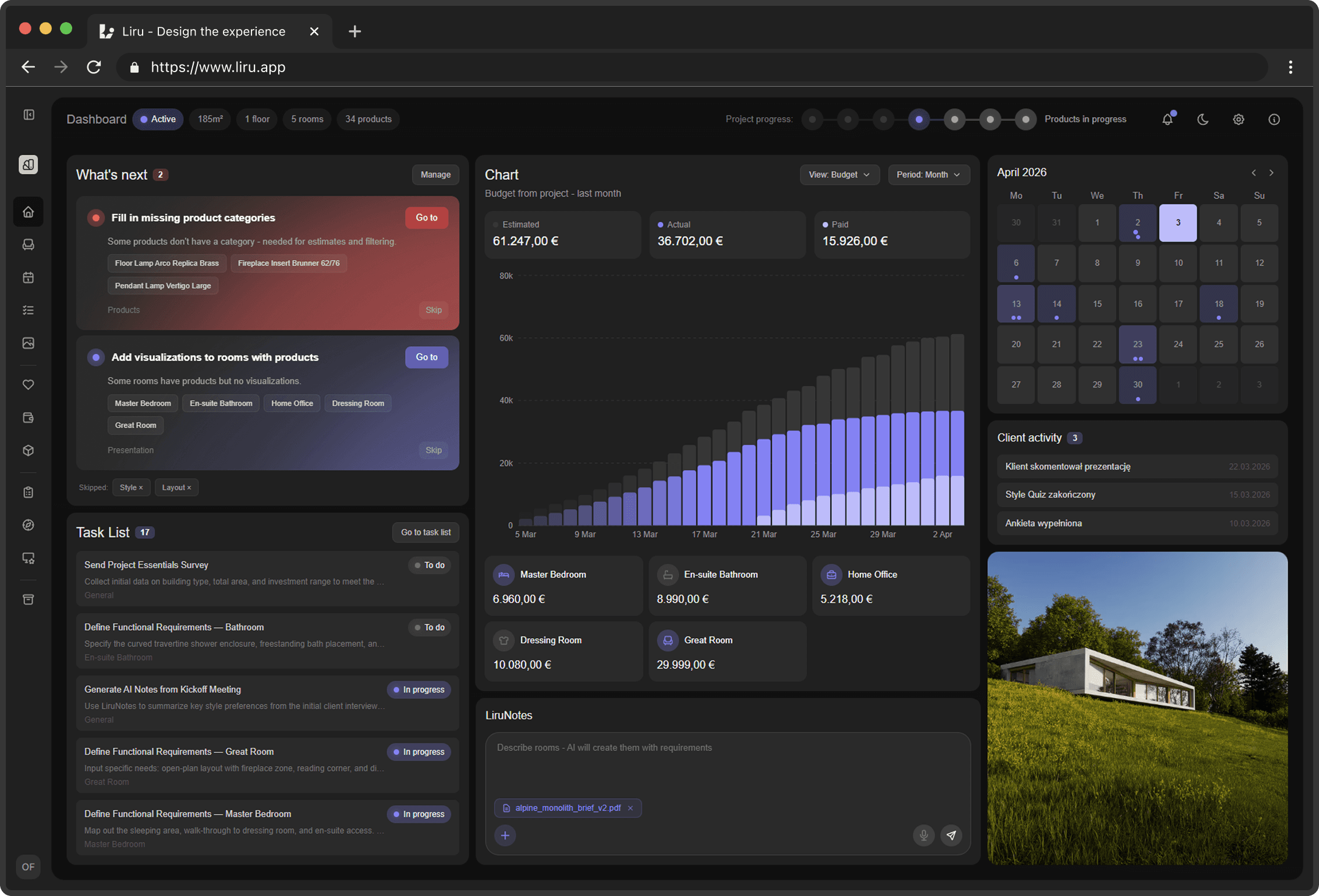
Liru was built around the exact principles described above. The client portal requires no account creation -- your client receives a link and a PIN code, and they're in. No app downloads, no passwords to remember, no onboarding friction. Once inside, they see their entire project: presentations to review, budget breakdowns by room, approved products, and outstanding decisions. Everything lives in one place, and every action is timestamped.
What makes this work in practice is the connection between the portal and your workflow. When a client approves a sofa in a presentation, that approval flows through to the budget instantly. When they leave a comment on a material selection, you see it in context -- not buried in a WhatsApp thread. The portal isn't a separate tool you maintain; it's the same project you're already working in, viewed from the client's perspective.
If scattered communication is costing you time and trust, Liru's early access is open. Join now and see what it looks like when your clients have a single place for everything.
Ready to try a better workflow?
Join early access